


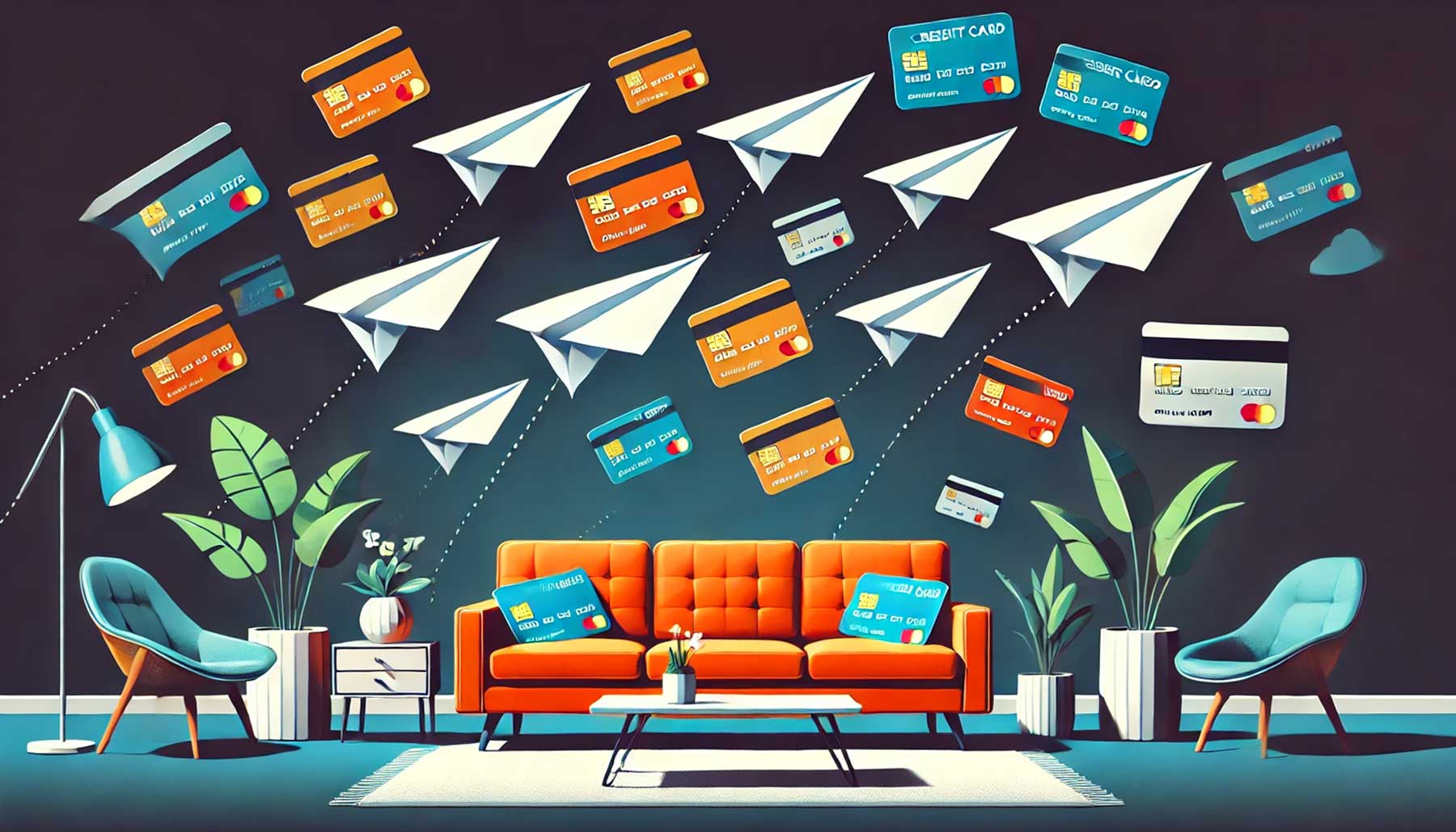
 Picture your credit card debt like a paper airplane caught in a windstorm. At first, it might have seemed light and manageable – just a simple fold here, a quick swipe there. But now it’s spinning wildly in the breeze, climbing higher and higher, completely beyond your control. And you’re not the only one watching your financial paper airplane dance in the wind – millions of Canadians are standing right beside you, necks craned, stomachs knotting as they track their own wayward debts through the sky.
That sinking feeling when you open your credit card statement? It’s as universal as gravity itself. Whether your balance reads $1,000 or $10,000, those numbers can send your pulse racing faster than a paper plane in a hurricane. Each purchase that seemed so necessary in the moment has become another fold in an increasingly complex origami of obligation, each interest charge another gust of wind pushing your financial goals further out of reach.
But here’s the thing about paper airplanes – even the ones caught in the strongest winds eventually have to land. Today, I’m going to bring your financial flight path back down to earth. We’ll examine exactly how credit card debt is affecting your financial future, why putting money into investments while carrying high-interest debt is like trying to fly a paper airplane upstream, and most importantly, how to regain control of your financial trajectory.
Understanding Credit Card Interest
Credit cards in Canada typically charge between 19.99% and 22.99% interest. Let’s put that in perspective with a real example: if you have $5,000 on your credit card at 19.99% interest, you’re paying about $1,000 a year just in interest charges. That’s nearly $100 every month going nowhere – not toward your debt, not into savings, just disappearing into interest payments.
Even if you invested that same $5,000, you might only earn $350-500 in a good year. This is why dealing with credit card debt needs to come first. The math simply doesn’t work in your favor when you’re trying to invest while carrying high-interest debt.
How Credit Scores Shape Your Financial Future
Your credit score plays a bigger role in your life than you might think. When you use too much of your credit card limit, your score starts to drop. This matters because your credit score affects so many parts of your financial life.
When you apply for a mortgage, lenders look closely at your credit score to decide whether to approve you and what interest rate to offer. A lower score usually means paying thousands more in interest over the life of your mortgage. The same goes for car loans – a lower credit score could mean paying hundreds more each year in interest.
Even landlords check credit scores when reviewing rental applications. A good credit score can be the difference between getting approved for your dream apartment or having to keep looking. Some employers even check credit scores for certain positions, especially in financial roles.
What Banks Really Look At
Banks have a specific way of looking at your financial health when you apply for loans. They focus on two main measurements that tell them if you can handle more debt.
The first is called your GDS ratio, which looks at how much of your income goes to housing. This includes your rent or mortgage payments, property taxes, heating costs, and condo fees if you have them. Banks want to see this number stay under 32% of your income.
The second is your TDS ratio, which adds up all your monthly debt payments, including your housing costs, car loans, student loans, and credit card payments. This number should stay under 40% of your income. When your credit card debt is high, it pushes up your TDS ratio, making it harder to qualify for loans or get good interest rates.
The Hidden Cost of Carrying Credit Card Debt
Carrying credit card debt while trying to invest creates a financial tug-of-war that you can’t win. Think about having $10,000 in investments while carrying $8,000 in credit card debt. While your investments might grow by 7% in a good year (earning you $700), your credit card debt is costing you about $1,600 in interest every year. You’re losing $900 just by trying to do both at once.
This situation also creates real stress in your daily life:
- Anxiety when checking your mail, hoping there isn’t another credit card bill
- Worry when friends suggest going out, knowing your cards are nearly maxed
- Stress about unexpected expenses that might come up
- Difficulty sleeping when thinking about your debt
This stress can affect your sleep, your relationships, and your overall wellbeing.
The Trap of Minimum Payments
Credit card companies make minimum payments seem attractive. They keep them low, often around 2-3% of your balance, making them seem manageable. But this is a costly trap. Let’s look at what really happens when you make only minimum payments on a $5,000 credit card balance:
Say your minimum payment starts at $150 per month. After a year of minimum payments, you’ll have paid about $1,800, but your balance will only have gone down by about $800. The other $1,000 went straight to interest. If you continue making only minimum payments, it will take more than 15 years to pay off that initial $5,000, and you’ll end up paying over $5,000 in interest alone.
Steps to Becoming Debt-Free
- Stop using your credit cards
- Switch to debit cards or cash for daily expenses
- Remove saved credit card information from online shopping sites
- Keep one card for true emergencies, but store it somewhere hard to access
- Build your $1,000 emergency fund
- Keep this money in a separate savings account
- Only use it for genuine emergencies
- Rebuild it as soon as possible if you need to use it
Choosing Your Debt Payoff Strategy
The Avalanche Method:
- Pay minimum payments on all debts
- Put extra money toward highest interest debt first
- Move to next highest interest rate when first debt is paid
- Saves the most money overall
The Snowball Method:
- Pay minimum payments on all debts
- Put extra money toward smallest balance first
- Move to next smallest balance when first debt is paid
- Provides motivation through quick wins
Take a look at The Money Couch Debt Repayment Calculator. It allows you to add your credit cards, the balance, the interest rate and will come up with a plan on exactly which ones to pay off first using either method above.
The One Exception to the Rule
There’s one situation where you might want to put a little money toward investing even while paying off credit card debt: when your employer offers RRSP matching. If your employer will match your RRSP contributions, this is essentially free money that can earn a return higher than your credit card interest rate.
For example, if your employer matches 50% of your contributions up to 3% of your salary, that’s an immediate 50% return on your money. This beats even credit card interest rates, so try to contribute enough to get the full match if possible.
Your Financial Future After Debt
Investment Options:
- Start with your TFSA for tax-free investment growth
- Increase RRSP contributions beyond employer matching
- Consider low-cost index funds for long-term growth
- Look into real estate savings if that’s your goal
Building Additional Security:
- Grow your emergency fund beyond $1,000
- Start saving for specific goals like a home down payment
- Consider starting a side business
- Build multiple income streams


